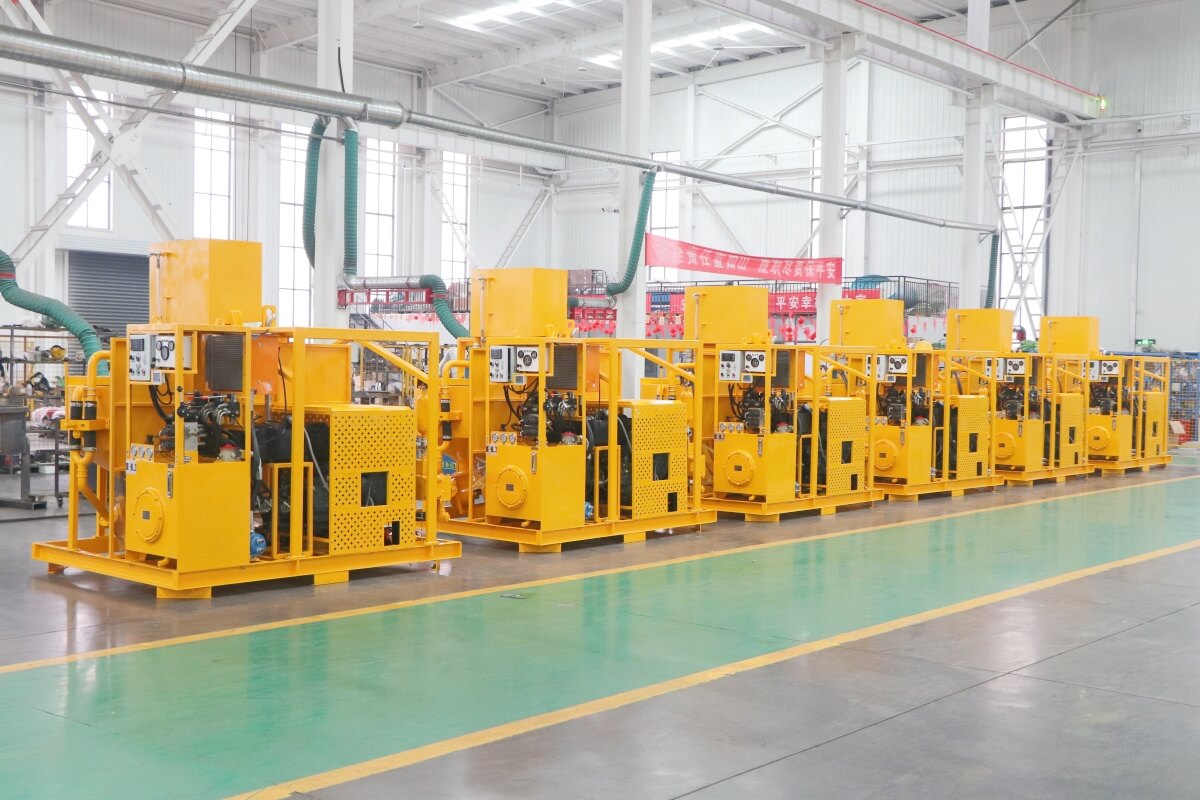
A slurry mixer is an essential piece of equipment widely used in various industries to blend solid particles with liquids, creating a homogeneous mixture known as slurry. This process is crucial in sectors such as mining, construction, wastewater treatment, and chemical manufacturing. The primary purpose of a slurry mixer is to ensure that solid materials are evenly dispersed within a liquid medium, preventing settling or separation during subsequent processing or transportation.
The uses of slurry mixers span numerous applications. In the mining industry, they are employed to mix ores with water and chemicals for easier extraction and processing. Construction projects use slurry mixers to prepare cement slurries for grouting and soil stabilization purposes. Wastewater treatment plants rely on these mixers to keep sludge uniformly suspended so that biological processes can efficiently break down contaminants. Additionally, chemical industries utilize slurry mixers in the production of paints, dyes, adhesives, and other products where precise consistency is vital.
Understanding the working principle of a slurry mixer helps clarify how it achieves uniform blending. Typically, a slurry mixer consists of a mixing tank equipped with an impeller or agitator powered by an electric motor. When activated, the impeller rotates at high speed inside the tank filled with liquid and solid particles. The rotation generates fluid flow patterns that lift solids from the bottom towards the surface while simultaneously pushing them sideways throughout the tank volume.
This continuous circulation prevents sedimentation by maintaining turbulence within the liquid body; turbulence disrupts particle settling by constantly moving them around. Depending on design specifics-such as impeller shape (e.g., paddle-type or turbine) and placement-the flow can be axial (flowing along the shaft direction) or radial (perpendicular outward). Axial flow promotes top-to-bottom circulation ideal for suspending heavier solids evenly across depth layers whereas radial flow creates shear forces helpful in breaking up agglomerates ensuring finer dispersion.
Some advanced slurry mixers incorporate variable speed drives allowing operators to adjust agitation intensity based on material properties like viscosity or particle size distribution; this flexibility improves mixing efficiency tailored for different slurries’ characteristics.
In summary, slurry mixers play a vital role in producing consistent mixtures necessary for efficient industrial processes involving solids-liquid combinations. Their operation relies on mechanical agitation generating turbulent flows that suspend particles uniformly throughout liquids preventing separation issues common without proper mixing techniques. By selecting appropriate designs suited for specific applications-considering factors such as solid concentration levels and required homogeneity-industries can optimize performance outcomes effectively using these indispensable machines.